
A good swimsuit should last several seasons. Most don't — not because of the fabric, but because of what happens after the swim. Chlorine, salt water, sunscreen, hot water and direct sun all attack the elastane that gives swimwear its stretch.
The good news: proper care takes about five minutes, and it can double the life of your suit.
Why swimwear wears out
Swimwear fabric is usually a blend of nylon or polyester with elastane (spandex or Lycra). Elastane is what makes a suit hug your body and snap back into shape. It's also the most fragile part.
- Chlorine breaks elastane down, causing sagging and a thin, see-through look.
- Salt water dries into crystals that stiffen and fade the fabric.
- Sunscreen and oils leave yellow stains, especially on white and pale colours.
- Heat — hot water, tumble dryers, direct sun — makes the elastic brittle.
- Rough surfaces like pool edges and rocks cause pilling.
Step 1: Rinse immediately after every swim
This is the single most important habit. Rinse your swimsuit in cool, fresh water as soon as possible after swimming — even if you only wore it for ten minutes.
- At the pool, use the shower.
- At the beach, rinse at your hotel or with a bottle of water.
- Never leave a wet suit rolled up in a bag for hours. Heat, damp and chemicals together do the most damage.
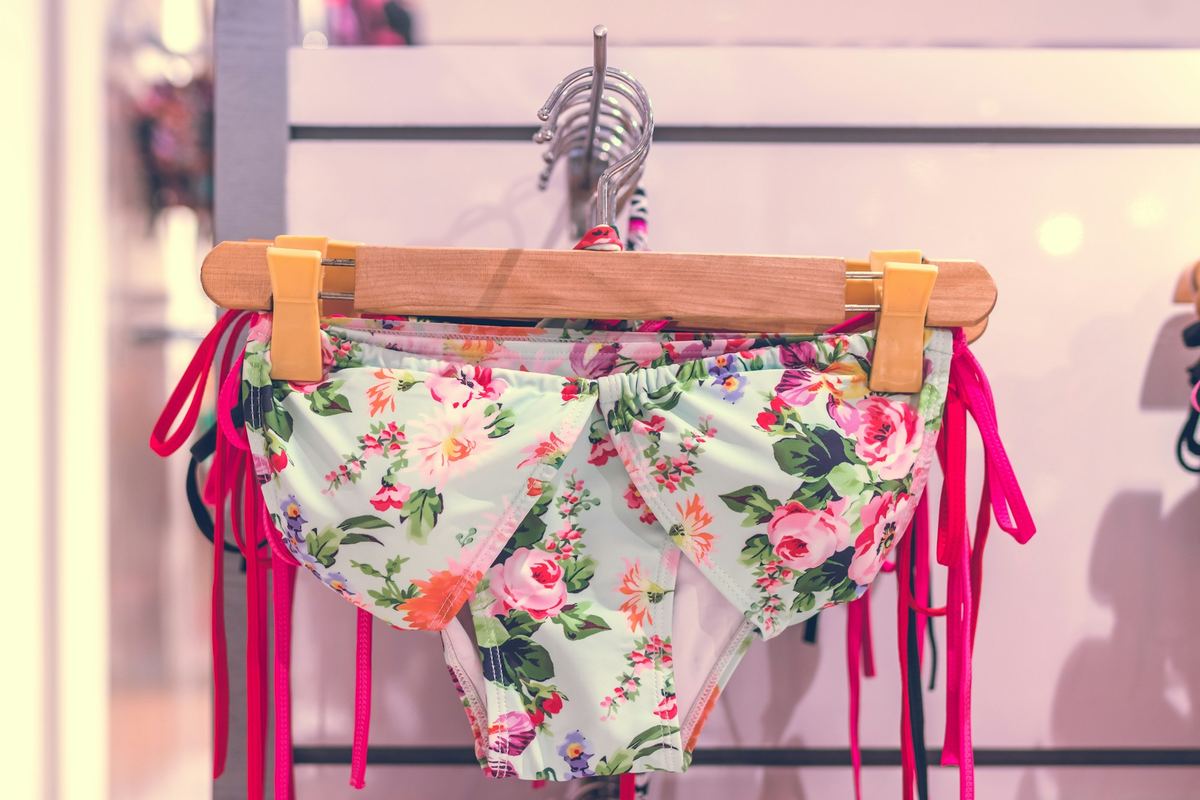
Step 2: Hand wash properly
After every few wears — or after every wear if you've used sunscreen — give it a proper wash.
- Fill a basin with cool or lukewarm water — never hot.
- Add a small amount of mild detergent: a gentle hand-wash liquid, delicate detergent or baby shampoo.
- Soak for 15–30 minutes.
- Gently swish and press the water through the fabric. Don't scrub or twist.
- Rinse thoroughly in cool water until no soap remains.
Avoid: bleach, fabric softener, strong powdered detergents and stain removers containing bleach.
Step 3: Don't wring it out
Twisting a swimsuit stretches and breaks the elastic fibres. Instead:
- Press out the water gently with your hands.
- Roll it in a clean towel and press to remove excess moisture.
Step 4: Dry it flat, in the shade
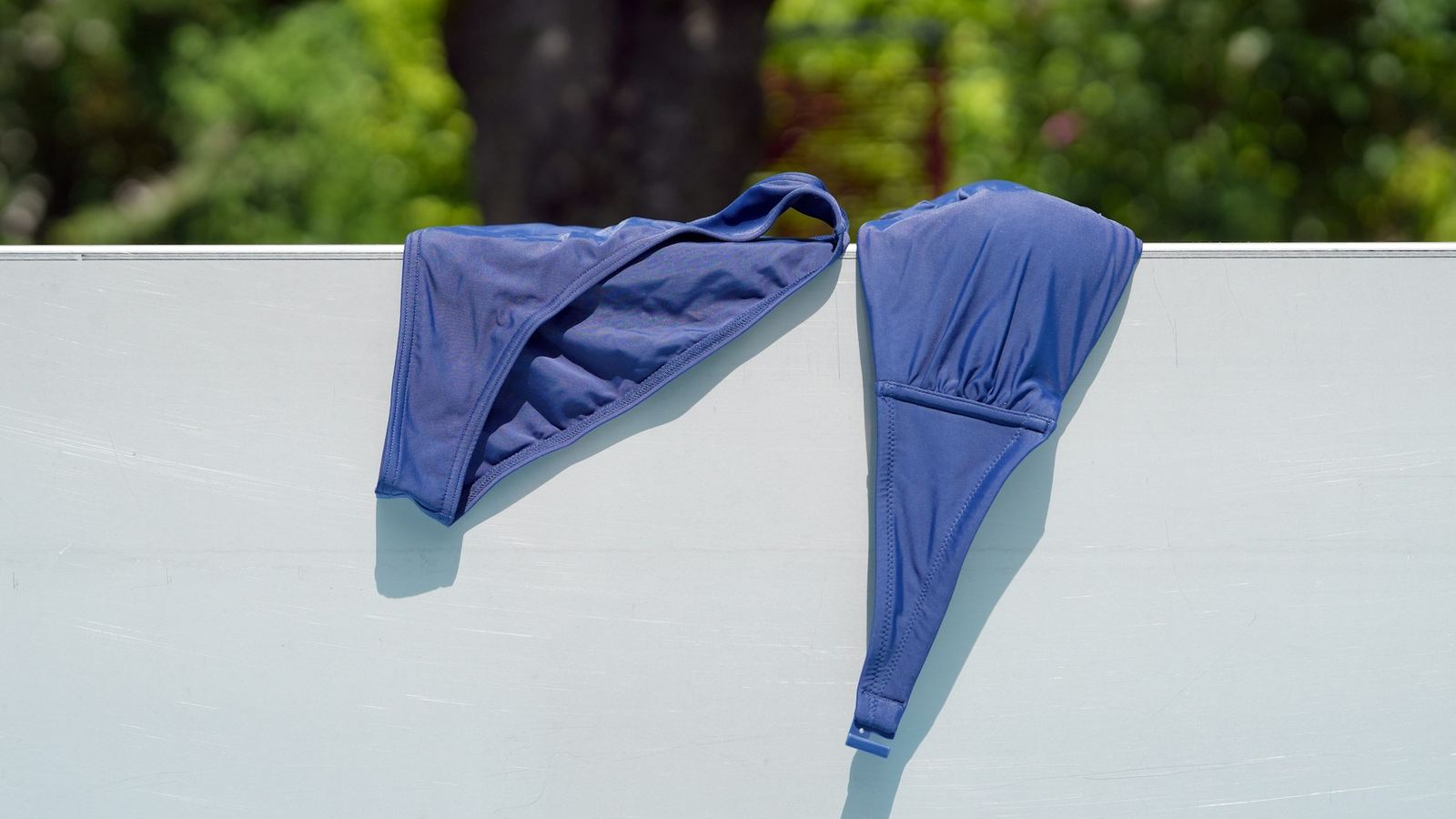
- Lay it flat on a towel or drying rack, or hang it from the middle over a line — not by the straps, which stretch under the weight of the water.
- Dry it in the shade. Direct Kenyan sun fades colour and weakens elastic fast.
- Never tumble dry, and never put it on a hot radiator or iron it.
Can you machine wash swimwear?
It's best not to. If you must:
- Put it in a mesh laundry bag.
- Use the delicate or hand-wash cycle, cold water.
- Use mild detergent, no softener.
- Skip the spin cycle or use the lowest setting.
- Fasten any hooks and ties first so they don't snag.
How to remove sunscreen stains
Yellow marks on swimwear are usually a reaction between sunscreen, sweat and minerals in the water.
- Rinse the area in cool water.
- Gently rub in a little mild dishwashing liquid.
- Leave for 15 minutes, then rinse.
- For stubborn marks, soak in cool water with a tablespoon of white vinegar for 30 minutes, then wash as normal.
Prevention helps: apply sunscreen 15–20 minutes before putting your swimsuit on, so it absorbs into your skin first.
How to get rid of chlorine smell
Soak the suit for 15–30 minutes in cool water with a tablespoon of white vinegar or a spoon of baking soda, then hand wash as normal. It neutralises the chlorine and the smell.
Smart habits that make swimwear last longer
- Rotate between two or more swimsuits. Elastane needs about 24 hours to recover its shape.
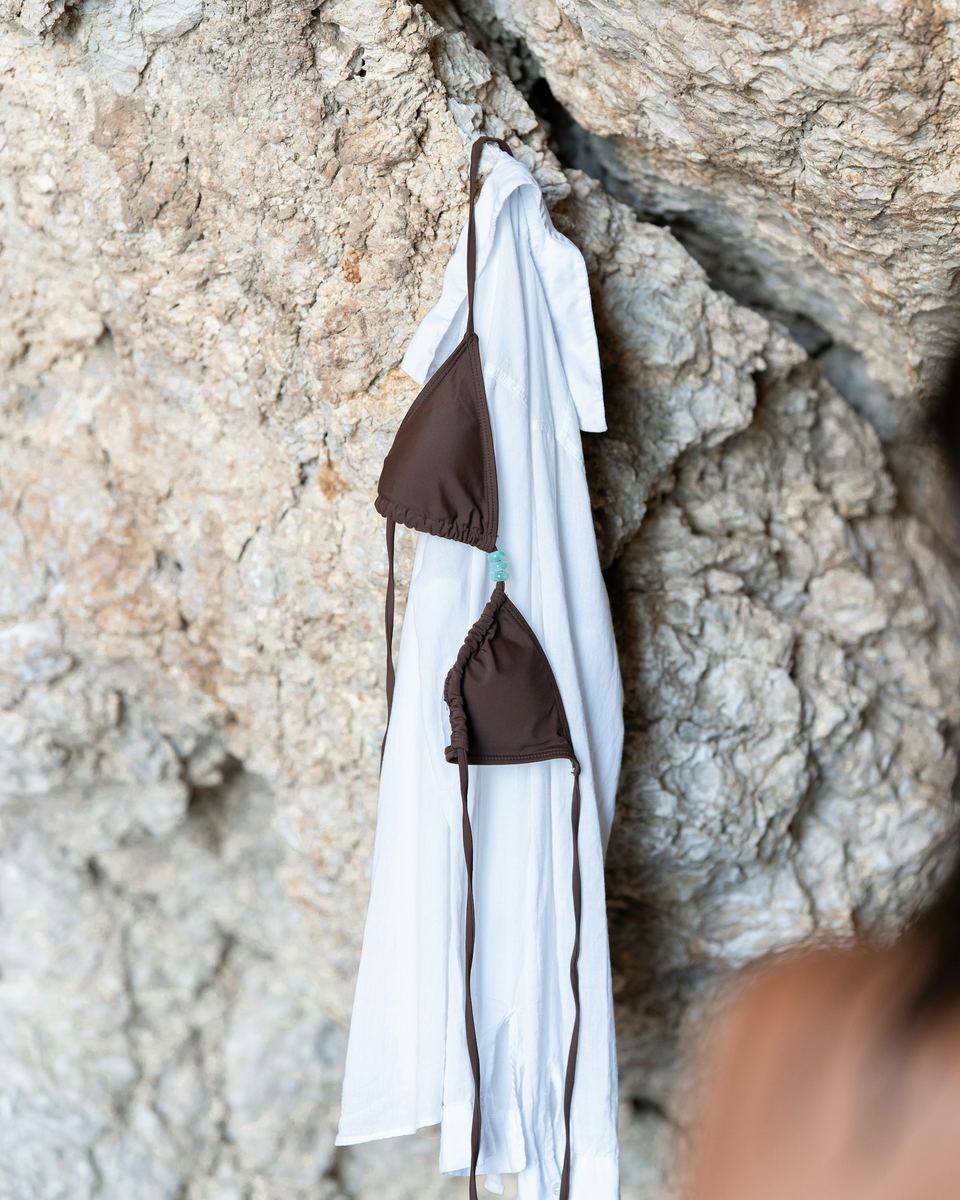
- Sit on a towel at the pool or on rocks to avoid pilling.
- Don't wear your swimsuit in a hot tub if you can avoid it — heat plus concentrated chemicals is the worst combination.
- Wear a darker or printed suit for regular chlorinated pool swimming.
How to store swimwear
- Make sure it's completely dry first, or it can develop mildew.
- Store flat or loosely folded in a drawer — not crushed.
- Don't store it in plastic — use a cotton bag so it can breathe.
- Keep moulded cups in shape by nesting them together.
When it's time to replace your swimsuit
- The fabric has gone thin or see-through when stretched.
- The elastic stays stretched instead of snapping back.
- The seat or neckline sags.
- There's heavy pilling, fading or holes.
A well-cared-for, good-quality swimsuit should give you several seasons of regular wear. If yours is past its best, browse our swimwear — and if you're choosing a new one, see how to choose the perfect bikini for your body type.